


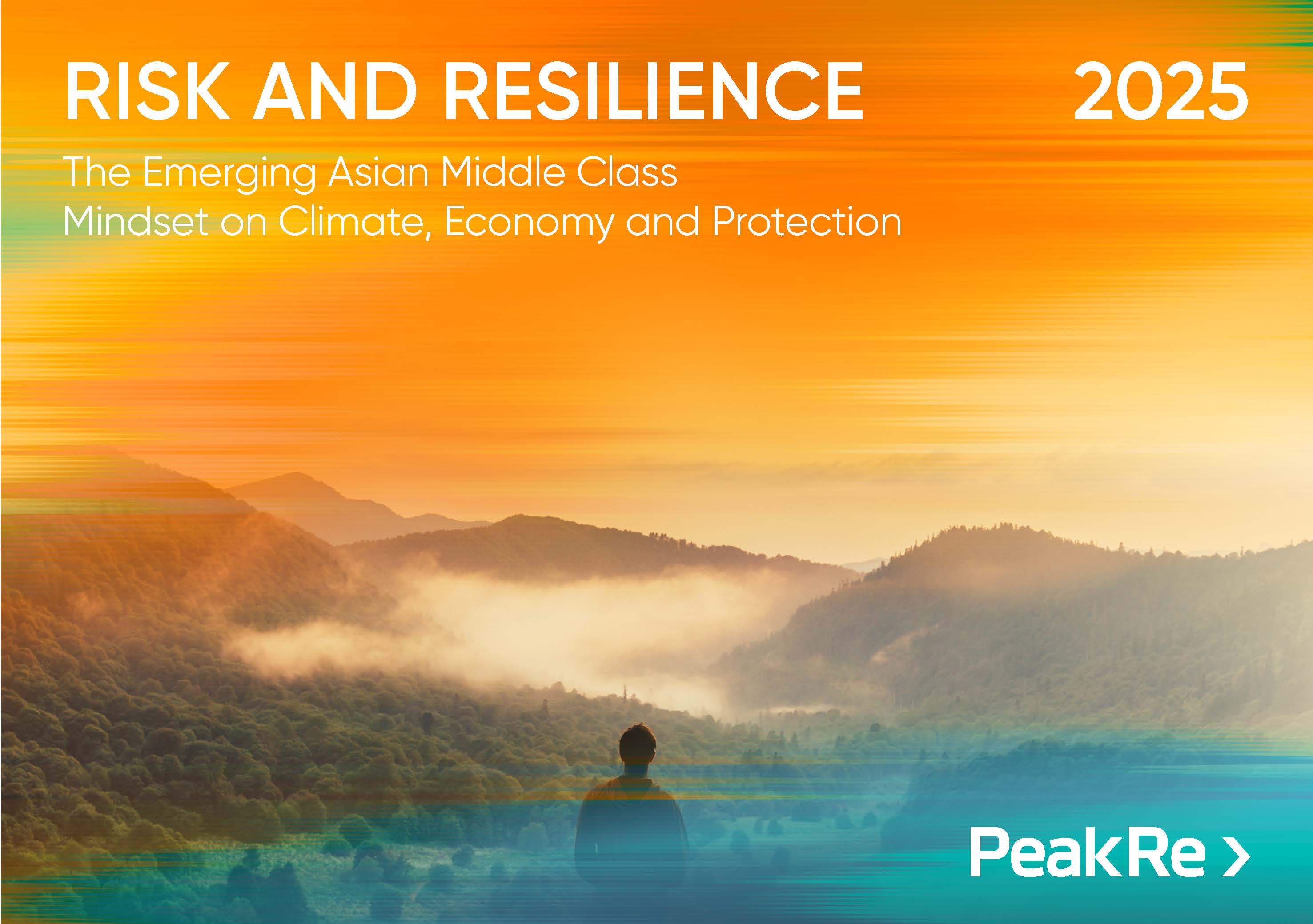

Emerging Asia’s middle class underestimates key protection gaps – with cyber and property risks the least understood, finds Peak Re Report(仅提供英文版本)
- Across Emerging Asia, the middle-class perceive their insurance protection gaps as small to moderate across risk types, highlighting an opportunity for insurers to increase risk awareness and education to support deepening insurance coverage
- Climate change is a growing concern among the middle-class with many affected by extreme weather events. However, the middle-class remains optimistic on a net-zero future and believes in the significant role of individual citizens, alongside governments, in climate action.
The Peak Re's Consumer Survey[1], led by Kritika Kashyap, Economist at Peak Re, gathered insights from 8,000+ middle‑class consumers across seven Emerging Asian markets, revealing that many underestimate their insurance protection gaps across health, mortality, property, retirement, and cyber risks.
While 64% of respondents expressed optimism about their financial futures, this positive outlook influences how they perceive their risk exposure and protection gaps.
- On average, middle-class consumers perceive small to moderate protection gaps, ranging between 27% for health to 35% for property and 38% for cyber risks.
- Perceived protection gaps fall significantly short of industry estimates, especially for cyber and property, indicating that these risks are the least understood.
- Vietnam and India, where over 80% are optimistic about their local economic environments, perceived the smallest protection gaps among surveyed markets.
Other than economic optimism, factors such as household income and financial literacy also affect risk perceptions.
“The findings highlight how cultural and behavioural factors influence people’s risk perception”, said Franz‑Josef Hahn, CEO of Peak Re. “There is a strong need to raise risk awareness among Asia’s young middle class. By deepening the understanding and accessibility of protection solutions, (re)insurers can help households safeguard their financial security and social mobility.”
Attitudes on climate change
The survey also explored attitudes around climate change. 43% of the Emerging Asian middle-class feel climate change will significantly affect their lives over the next three years, with the impact rising over time.
Floods and heatwaves stand out as the top extreme weather concern in the region. Consumers reported health impacts (41%), disruption to daily commutes (37%) and property damage (32%) due to these events in the past.
At the same time, consumers feel positive that net-zero goals can be achieved, with 56% saying stronger actions are needed. Most middle-class consumers are proactively adopting sustainable behaviours and see the individuals’ role as crucial in taking climate action.
Additionally, around 80% express interest in green insurance products that support climate adaptation, energy savings and transition, and green investments.
Kritika Kashyap, Economist at Peak Re, noted: “Optimism and resilience continue to shape the mindset of Emerging Asia’s middle class. The survey highlights their aspirations and protection needs, while uncovering gaps in risk awareness and attitudes toward emerging risks such as climate and cyber. These insights provide (re)insurers with an opportunity to better understand these evolving dynamics and design more effective, tailored protection solutions.”
[1] The survey was conducted by Intuit Research between 27 May to 5 June, 2025, and included over 8000 respondents across Emerging Asia. As defined by the International Monetary Fund (IMF), this group includes seven economies, namely, China, India, Indonesia, Malaysia, Philippines, Thailand and Vietnam. The middle-class was defined for this study as any household with an income between 2/3 and 3x the local median household income.
其他新闻稿


选择鼎睿
为您保驾护航
为您保驾护航